
An AI search toolkit for a US agricultural marketing agency
11 Claude-powered tools that turned an AI search audit into work the team does themselves. The agency used them to update its own website and its clients' websites for AI search.

People now ask ChatGPT, Perplexity or a Google AI Overview for a recommendation and get an answer that names a handful of businesses. The agency had an AI search audit that said what needed to change. Acting on it was the hard part.
It's static
A report lists what to fix, not how. Someone still has to turn each item into real work.
The fixes are technical
Crawler rules, JSON-LD schema, head tags and author markup tend to wait in a developer's queue.
Content has to match how people ask
Pages need headings phrased as real questions and short, direct answers an AI can quote.
Generic AI writes generic copy
Off-the-shelf tools don't talk the way farmers and equipment dealers do.
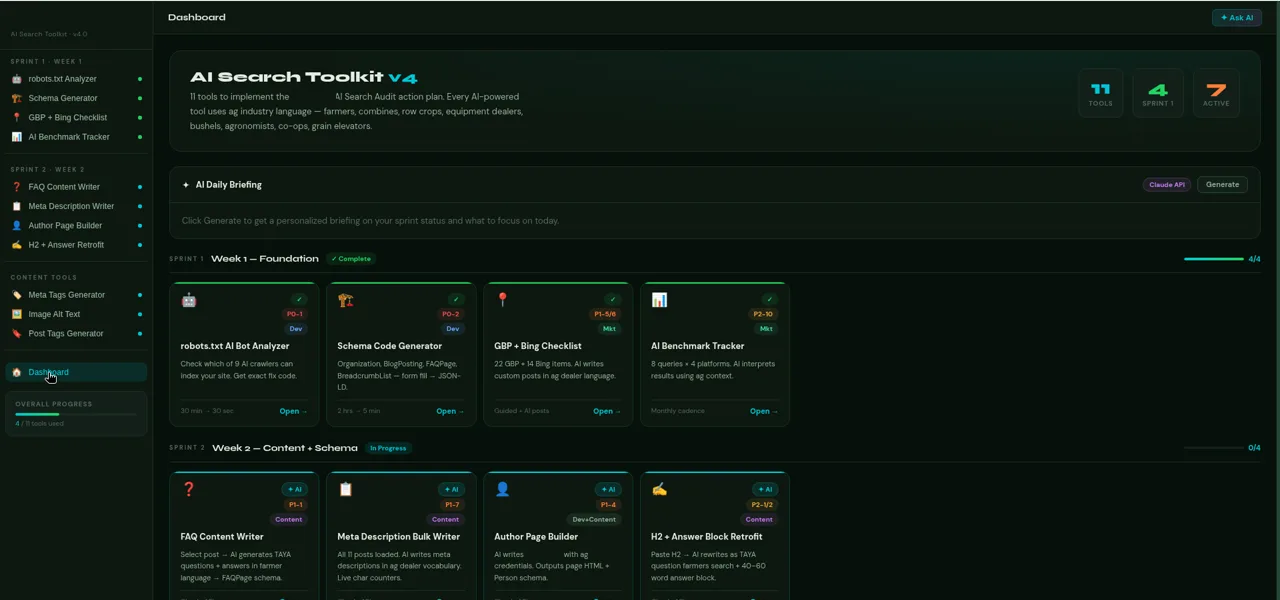
A web app with 11 tools, one for each action in the audit's plan, in the plan's own order. A short form goes in, ready-to-paste work comes out.
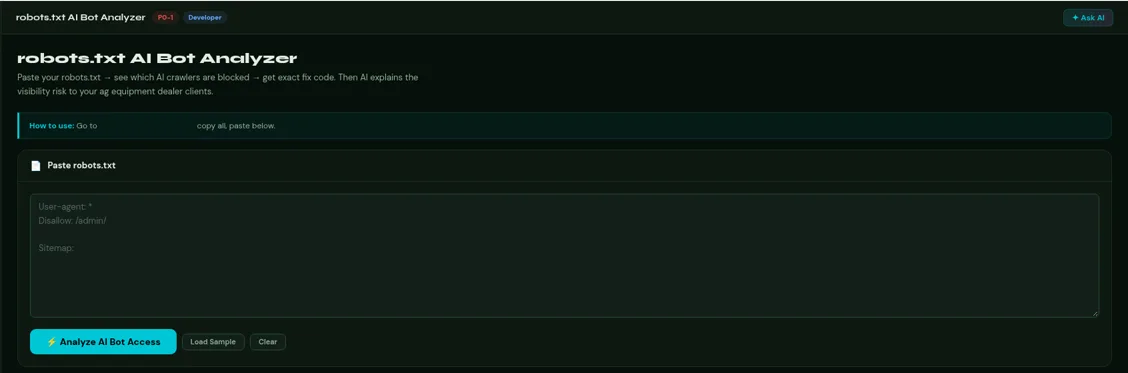
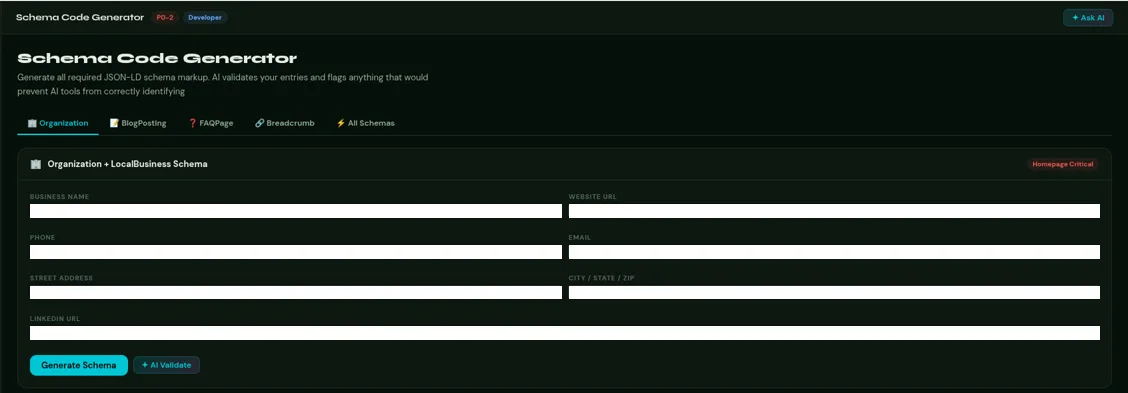
- Sprint 1, FoundationAn AI crawler robots.txt checker (9 AI crawlers, with exact fix code), a schema generator (Organization, BlogPosting, FAQPage, Breadcrumb), a Google Business Profile and Bing checklist with AI-written posts, and an AI benchmark tracker (8 queries across 4 AI platforms, run monthly).
- Sprint 2, Content and schemaAn FAQ writer that outputs FAQPage schema, a bulk meta description writer with live character counters, an author page builder with Person schema, and an H2 retrofit that turns headings into the questions people search, each with a 40–60 word answer.
- On-demand generatorsA meta tags generator (full head block), an image alt text generator with three variations per image, and a post tags generator for CMS tags, schema keywords and social hashtags.
- Around the toolsAn AI daily briefing, progress tracking and quick links to the validators the team already uses.
Built with: the Claude API. Every AI tool writes in the industry's own language: farmers, equipment dealers, agronomists, co-ops.
Step by step
- One tool per action. Each item in the audit became a working tool, grouped by sprint.
- A form, not a blank page. The team fills in a few fields and gets code or copy ready to paste.
- Their industry's words. Prompts are tuned to how the agency's market actually talks.
- Keep checking. The benchmark tracker turns "are we showing up in AI answers?" into a monthly routine.
What changed
Inside the build
The audit isn't the hard part. Acting on it is. If someone asked an AI assistant for a business like yours today, would it name you, and would your team know what to change if it didn't?Christine Mendoza, Founder
Tell me what your team keeps doing by hand.
A 30-minute call with me, not a sales team. I'll ask why your business exists, what's getting in the way and what you want, and tell you honestly whether a system would help.